Preparing Future Officers for the Electromagnetic Fight
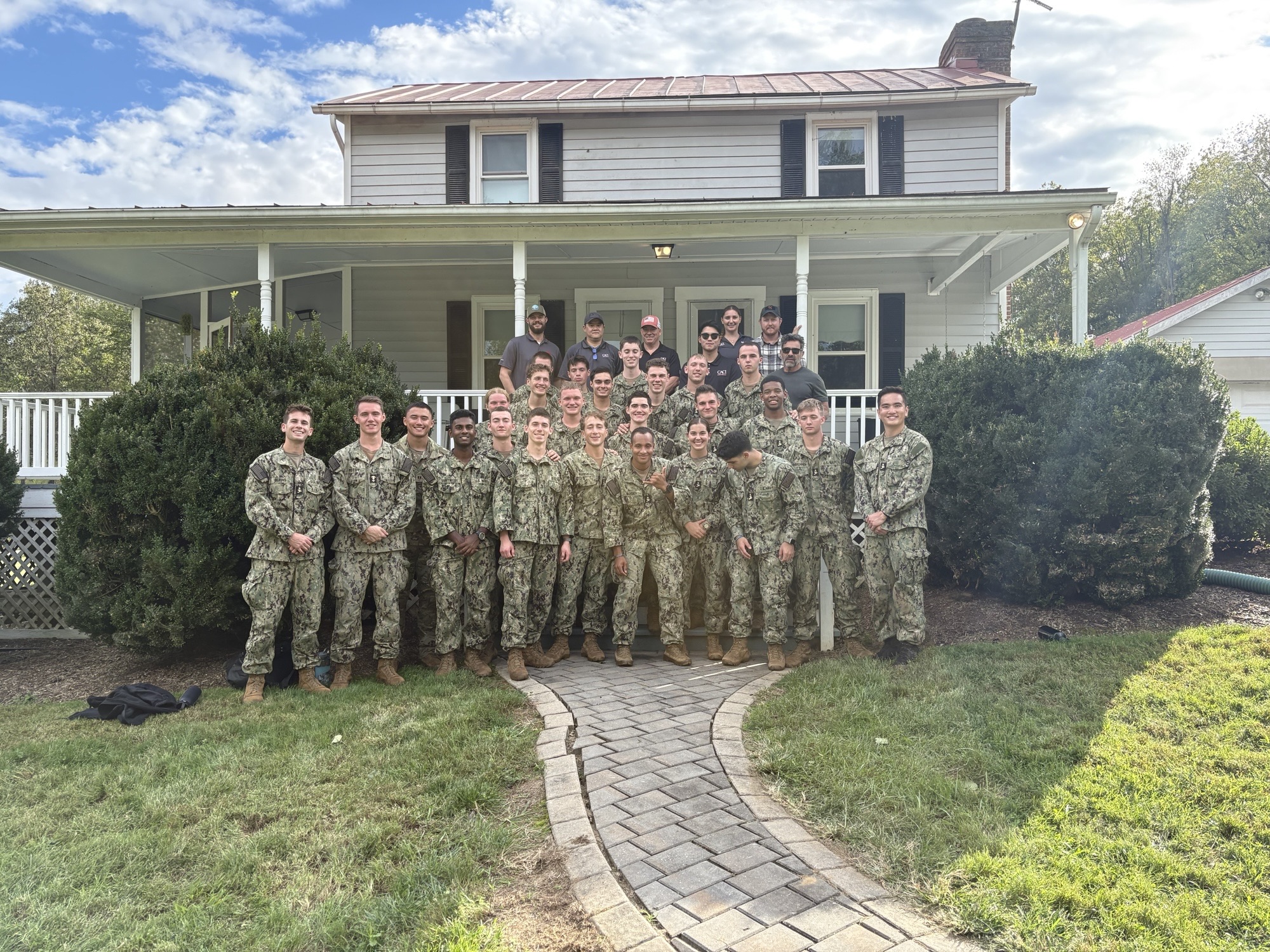
CACI team members and ARES midshipmen gather for a group photo outside the Farm facility.
As modern battlefields grow more contested across the electromagnetic spectrum, early exposure to operational electronic warfare (EW) and counter‑unmanned aircraft systems (C-UAS) is increasingly essential for future officers. At CACI’s “Farm” facility in Washington, VA, 24 midshipmen from the U.S. Naval Academy’s Adaptive Rapid Engagement Squadron (ARES) learned how modern EW systems are built, tested, and applied in real operational scenarios. The visit was part of an ongoing collaboration between CACI and the Naval Academy focused on preparing future officers for the environments where these technologies are used.
Learning at Mission Speed
Throughout the day, midshipmen worked directly with the engineers who build CACI’s EW and C-UAS technology. They were exposed not only to the capabilities of each system but also to the design choices behind them. This operator‑to‑engineer interaction mirrors the feedback loops used in real-world capability development and is a core component of CACI’s mission‑driven approach. CACI engineers, in turn, received immediate operator feedback that helps refine interface design, workflows, and future software updates.
Several midshipmen noted that the hands‑on experience clarified how quickly EW decisions must be made and the amount of information an operator must manage. Their observations gave engineers clearer insight into how system layouts, visualization methods, and alerting features can better support rapid decision‑making - informing ongoing development.
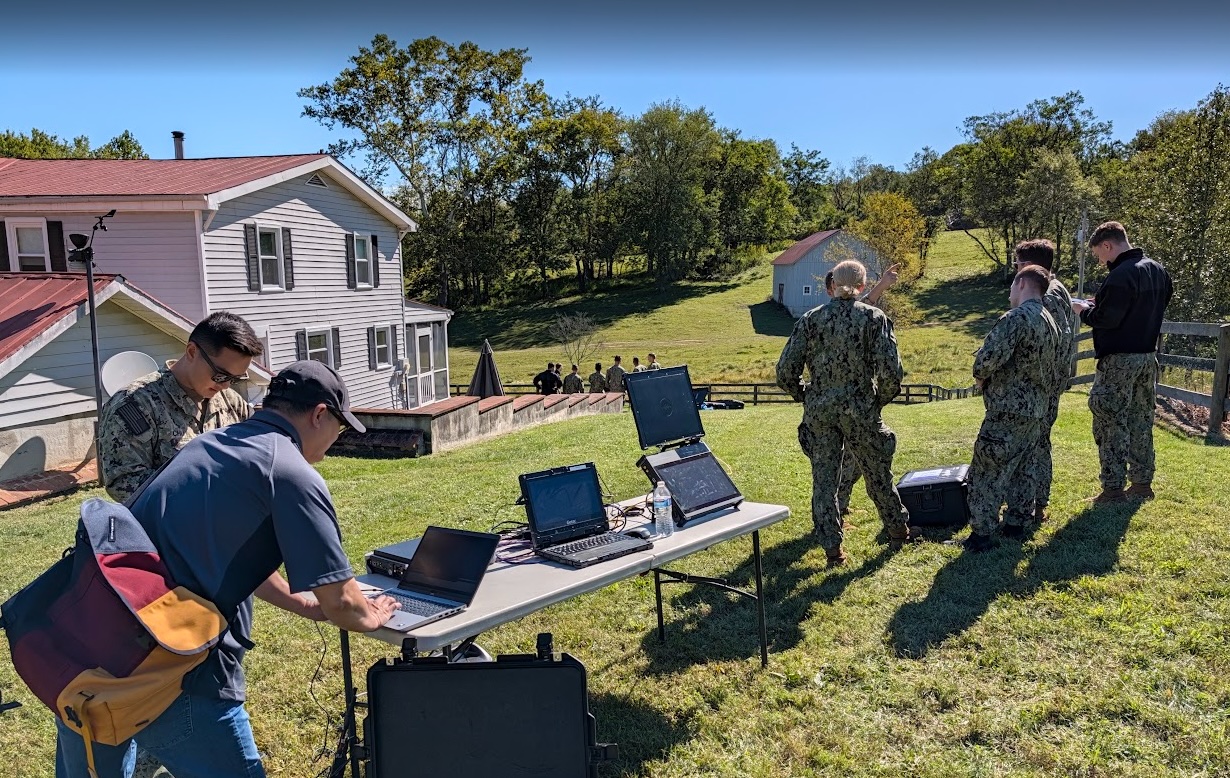
CACI engineers walk midshipmen through real-time signal analysis and system operations at a training station.
Experiencing the Future of EW Firsthand
The rotation began with the Backpackable Electronic Attack Module (BEAM) 3.0, the latest evolution of CACI’s EW system and a major step forward from the BEAM 2.0 units the midshipmen had previously used. Once they began working with the system, they saw how quickly BEAM 3.0 isolates signals of interest, classifies them, and reprioritizes the spectrum picture as conditions change. Their input on interface layout, color‑coding, and alert timing offered concrete operator‑driven guidance for future refinements.
Spectrum Guard, CACI’s electromagnetic spectrum operations awareness system, offered an even deeper look at radio frequency (RF) sensing. Midshipmen built RF fingerprints for different UAS and watched how Spectrum Guard correlates signatures across multiple bands to flag anomalies before a drone is visually detected. This demonstration highlighted how multi‑band analysis supports earlier threat identification in operational environments. Their questions helped engineers identify ways to streamline analytic workflows and surface the most operationally relevant information without overloading the user.
CACI’s fiber-optic tethered Dark RF Assault Drones (DRAD) demonstrated how a platform can remain connected even in a congested or contested spectrum environment. Midshipmen with drone experience immediately recognized the benefits of a fiber optic tether for resisting RF interference. They also identified practical tradeoffs, including maneuverability in shifting wind patterns. Their feedback helped validate system design assumptions and refine deployment guidance for future field tests.
MAGPIE, CACI’s RF training solution, introduced a different aspect of electromagnetic operations. Used as a decoy, the system prompted discussion about how unmanned platforms can manipulate an adversary’s perception of the battlespace. These conversations generated new test variables for evolving decoy behavior, flight profiles, and operational concepts.
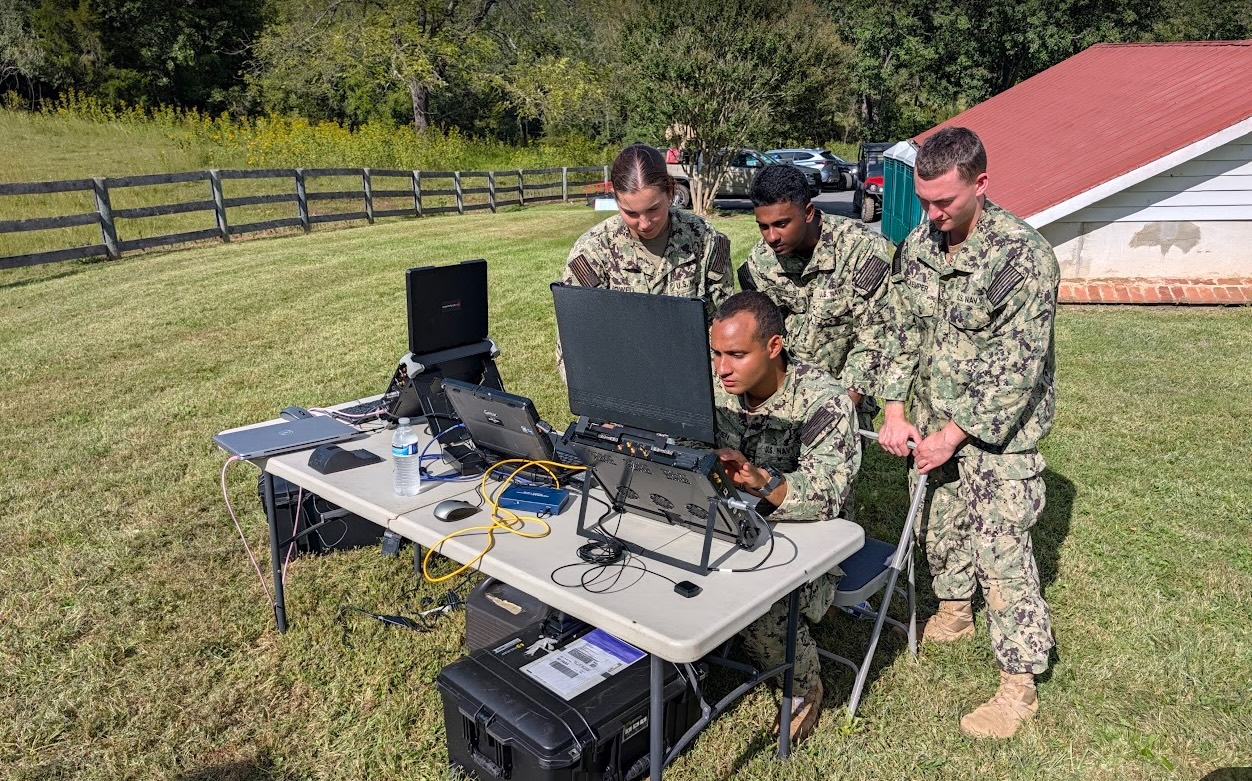
Midshipmen engage in hands-on training with CACI’s electronic warfare and counter-UAS (c-UAS) systems.
Turning Challenges into Insight
A few technical interruptions occurred during the day, including unexpected signal congestion and a recalibration sequence. Rather than hindering the schedule, these moments provided realistic demonstrations of how operators diagnose issues in the field and how engineers identify root causes under operational constraints.
One midshipman described the experience clearly: “Maintaining and leveraging the partnership with industry is absolutely essential to ARES’ development and the development of future officers.”
Partnership that Sharpens the Mission Edge
For CACI, the visit provided valuable operator level insight that cannot be replicated in a lab environment. For the midshipmen, it revealed how advanced EW systems are designed and why each feature matters in real scenarios.
By combining hands on exposure with direct engineering engagement, the collaboration strengthens both next generation EW technology and the preparation of future officers who will rely on these systems. This partnership continues to strengthen CACI’s capabilities while equipping tomorrow’s officers to use these systems with confidence and understanding.