The Long‑Range Advantage: Strengthening Homeland Defense with SkyValor Counter‑UAS
CACI Case Study
The appearance of U.S. Department of War (DoW) visual information or references does not imply or constitute DoW endorsement. The views expressed in this case study are those of CACI and do not necessarily reflect the official policy or position of JIATF-401 or the DoW.
The proliferation of low‑cost unmanned aerial systems (UAS) has rapidly shifted the national security landscape. Adversaries can inexpensively and readily acquire off the shelf or customize small drones creating operational challenges for Counter-UAS systems. The use of advanced technologies, including encryption, cellular / SATCOM communications, and onboard autonomous navigation further complicate the ability to detect, track, identify, and defeat small UAS (groups 1-3). These platforms routinely evade current detection capabilities, penetrating restricted airspace to surveil and potentially strike military, government, and civilian targets. Adaptable UAS configurations able to be produced in large numbers and operated with minimal skill pose a significant threat to critical infrastructure, force protection, and homeland security.

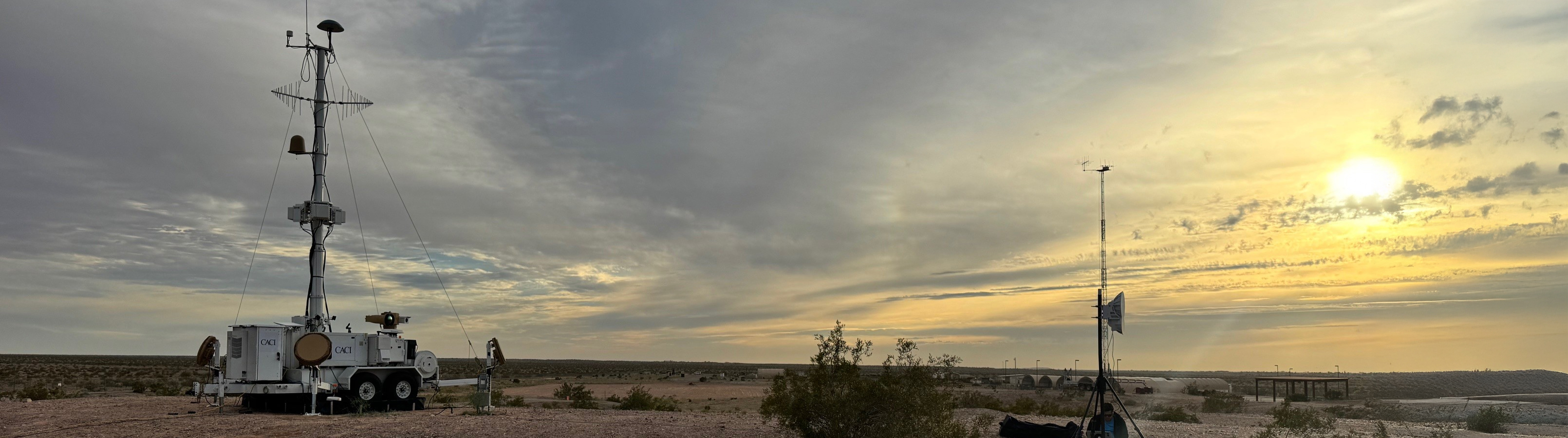
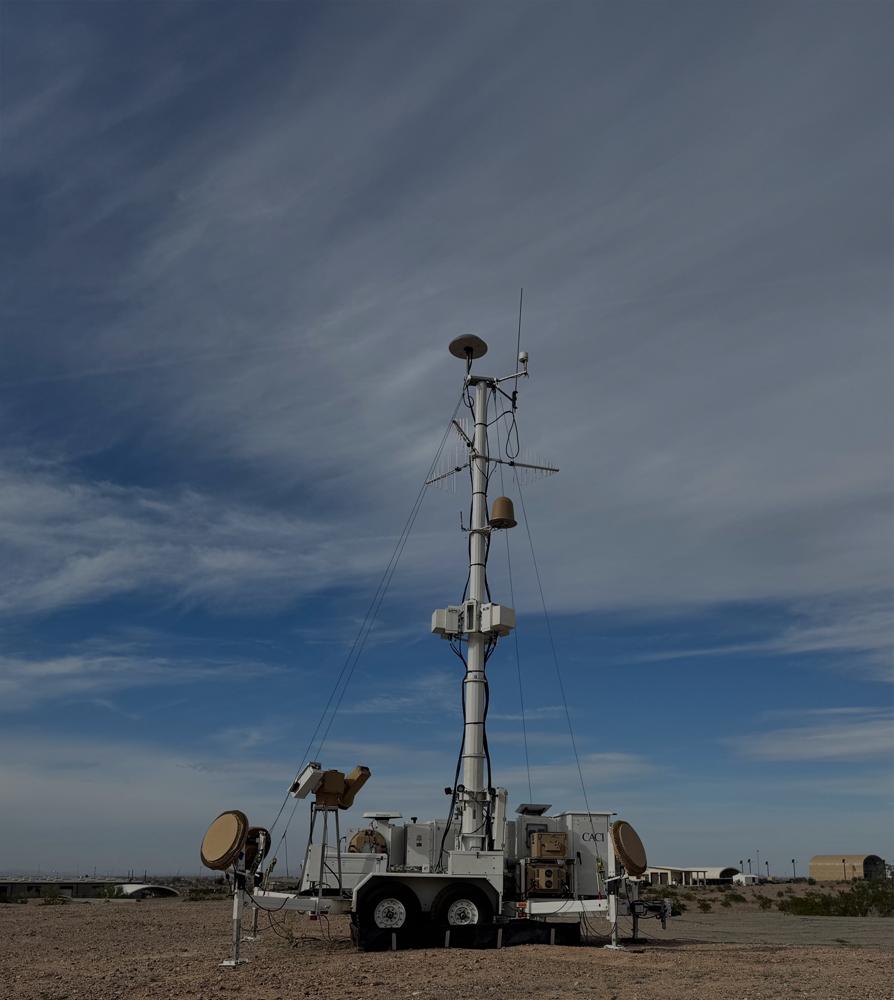
CACI’s SkyValor is engineered to restore decision advantage to the defender in this complex operational environment. SkyValor delivers long‑range multi-sensor detection through AI enabled processing and data fusion to quickly alert an operator of a potential UAS threat. Split‑second decisions resulting from late detection turn into actionable minutes of warning enabling operators to assess potential threats and choose the best course of action. The system automatically queues up available smart jamming and/or sophisticated electronic defeat options tailored to the specific drone(s) whether they are operating with RF or cellular data links. Extending non-kinetic defeat range reduces the cost per kill, offering operators the ability to engage with RF or cellular “bullets” before resorting to kinetic defeat.
automated RF, radar, and EO/IR sensing
by JIATF‑401 at MCAS Yuma
Adversarial adoption of low cost, commercially available UAS
Adversaries exploit inexpensive commercial components to mass produce drones with low radar cross sections, customized C2 links, and onboard autonomy. Swarms of improvised platforms strain readiness and overwhelm traditional C-UAS defenses.
These conditions shift the strategic cost curve in favor of the attacker. Many systems often detect drones at shorter ranges, leaving operators with minimal time to understand intent, decide on mitigation, and protect critical infrastructure.
SkyValor was designed, in part, to minimize surprise. No drone should operate in monitored airspace without being detected.
To meet this requirement, SkyValor possesses:
- Long‑range RF/cellular, radar, and EO/IR sensing
- AI‑enabled, automated signal processing to survey the spectrum and find C2 links
- Software‑defined EW and cyber defeat techniques
- An extensible open architecture for rapid updates for evolving threats
Leveraging more than two decades of RF engineering and digital signal processing expertise, SkyValor detects UAS signals at distances up to ten times further than other RF-based C-UAS systems. It identifies the C2 link and onboard radio / flight controller to reduce false alarms. Non‑kinetic defeat options ranging from advanced jamming to tailored cyber over RF effects at automatically generated and delivered with precision that avoids widespread disruption of other communications in the area.

SkyValor underwent an operational demonstration with Joint Interagency Task Force 401 at Yuma, Arizona, in May 2026. This was the system’s third demonstration over a period of 9 months going back to Falcon Peak 25.2.
Day 1:
Red Team drones launched from 30 and 20km distance from the system. Sky Valor proved its ability to detect threats at various ranges during this operational demonstration.
Day 2:
Red Team completed test flights at 20 and 10km. Additional demonstrations showcased a precision non-kinetic kill and cellular detect and defeat capability for an audience consisting of individuals from DoW and CBP. Demonstrated capabilities included:
- Cyber over RF defeat of a custom‑built drone
- Detection and identification of a cell phone mounted on a drone using 3D direction finding
- Targeted disruption of the cellular device with no impact to the cellular network or other cell phones in the area
Extended range selective, platform‑specific effects become critical in swarm scenarios, particularly in complex RF environments here in the US where low collateral defeat is a key objective.
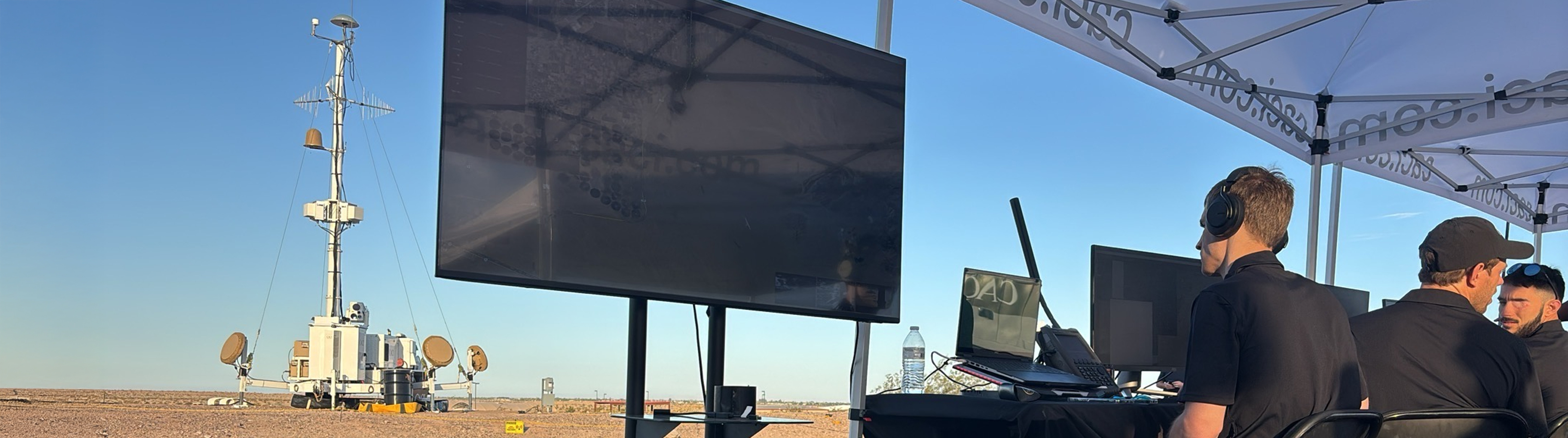
Validating SkyValor in an operational environment
Data from the JIATF‑401 evaluation reinforced SkyValor’s core advantage:
- Long-range detections up to 30 km increase decision time for operators and enable monitoring of a broad area with one system
- Demonstrated ability to deliver tailored non-kinetic RF and cellular effects against custom-built threats
SkyValor transforms last‑second reactions into deliberate, informed responses.
Deploying SkyValor in support of national security
Following successful validation, SkyValor is advancing toward broad deployment across multiple fronts with additional units being built to provide border security, base protection, and support for national security special events. Rapidly relocatable, truck-mounted and permanent fixed site variants provide additional deployment options. SkyValor’s open architecture allows for effortless integration of new sensors and kinetic defeat options, ensuring adaptability to meet emerging threats. Furthermore, SkyValor is being incorporated into layered air defense systems, offering long-range sensing and non-kinetic capabilities that reduce dependence on costly kinetic interceptors.